
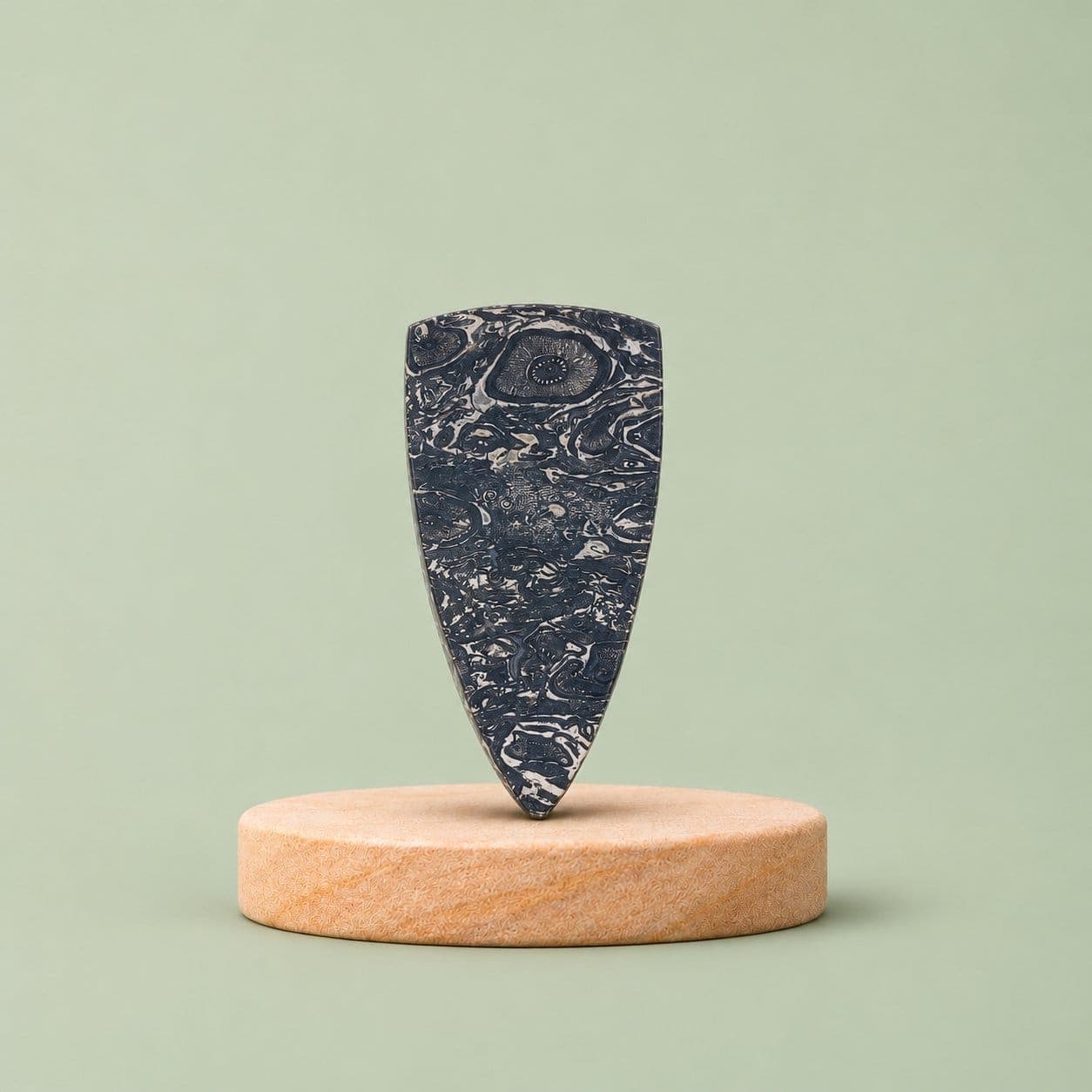
Indonesian gemstones are not a single material. A drawer that is safe for a Sukabumi picture jasper cabochon can destroy a Kalimaya opal or dull the fluorescence of Sumatran blue amber. This guide explains how to clean, store, and display Indonesian stones according to their mineralogy, so color, polish, and structure survive decades of collecting.
Why Indonesian Gemstones Need Specific Care
Indonesia's gemstones form in volcanic hydrothermal systems, silica-rich sedimentary basins, and resin-bearing coal seams. That diversity means hardness, porosity, and water content vary widely. Chalcedony (Mohs 6.5–7) is tough and chemically stable; hydrophane opal can contain 3–21% water by weight and crazes when it dries too fast; amber is an organic polymer that oxidizes and embrittles under heat and UV. Treating all of them like "hard stones" is the most common cause of avoidable damage.
Stability by Mineral Group
Silica-rich stones: agate, jasper, chalcedony
Microcrystalline quartz is among the most stable collector materials. It resists acids (except hydrofluoric acid), tolerates normal humidity swings, and keeps polish. Risks are mechanical: point impacts, grinding grit contamination, and thermal shock from sudden temperature change. For Halmahera chrysocolla-in-chalcedony, remember that included copper minerals can be softer than the silica matrix, so scrubbing with abrasive pads can undercut the surface.
Kalimaya black opal (Banten)
Kalimaya is a hydrophane opal from volcanic clay deposits in Banten. Hydrophane opal absorbs water and can change transparency and play-of-color temporarily. Rapid drying creates tensile stress and crazing (fine surface cracks). Keep it away from desiccants, direct heat, and fast humidity swings. Stable room humidity and slow, even drying are safer than "bone dry" storage.
Indonesian blue amber (Sumatra)
Blue amber's daylight fluorescence comes from polycyclic aromatic hydrocarbons in a fossil resin matrix. Amber is soft (Mohs 2–2.5) and thermally sensitive. Prolonged strong UV, heat above ~150°C, and solvents can darken, craze, or fracture it. Store away from sunny windows and radiators; avoid ultrasonic cleaners and steam.
Agatized fossil coral and palm wood
Silicified fossils are quartz, so chemically stable, but they retain porosity and layered structure. Cross-cut and longitudinal slabs can split along growth lines if dropped or exposed to freeze–thaw cycles. Keep slabs flat, supported, and free of vibration.
Cleaning: Safe Methods and Common Mistakes
Safe routine
- Use lukewarm water, mild pH-neutral soap, and a soft brush or microfiber cloth.
- Rinse thoroughly; soap film attracts dust and can dull polish.
- Dry slowly with a lint-free cloth; for opal, let it air-dry at room temperature.
- For matrix specimens, use a soft artist's brush and compressed air at low pressure.
Avoid
- Ultrasonic and steam cleaners for amber, opal, and fractured stones.
- Abrasive pads, toothpaste, or household cleaners containing ammonia or bleach.
- Sudden temperature changes, such as rinsing a warm stone in cold water.
- Soaking porous fossil woods or opal doublets in water.
Storage: Humidity, Light, and Contact
Humidity control
Aim for stable relative humidity around 40–55% for mixed collections. Avoid sealed containers with desiccant for hydrophane opal; instead use ventilated boxes in a stable room. Silica gel is useful for rust-prone tools, not for opal.
Light and UV
Store amber and some opals away from direct sunlight and strong display lighting. UV accelerates amber oxidation and can fade dyes in treated stones. LED lighting with low UV output is preferable for display cases.
Physical separation
Wrap individual stones in acid-free tissue or microfiber and store in compartmented boxes. Harder stones (agate, jasper) can scratch softer ones (amber, opal). Keep slabs vertical with padded dividers to prevent edge chipping.
Display and Long-Term Preservation
For display, use stable mounts, low-UV LED lighting, and dust covers. Rotate sensitive specimens out of bright cases periodically. Label specimens with locality and acquisition data; documentation supports provenance and value but also reminds handlers of material-specific limits.
Emergency Care
If a stone cracks or crazes, do not apply household glue or oil. Oils can penetrate opal and alter color permanently; cyanoacrylate can trap moisture. For valuable specimens, consult a lapidary or conservator. For minor surface film on agate, re-polish with cerium oxide or diamond paste on a felt wheel at low speed.
FAQ
Can I clean Indonesian agate with an ultrasonic cleaner?
Yes for solid, untreated agate and jasper, provided there are no fractures, dye, or glued repairs. Avoid ultrasonic cleaning for opal, amber, and any stone with visible fractures.
How should Kalimaya opal be stored?
In a stable room environment with moderate humidity, away from heat and desiccants. Avoid rapid drying; let the stone equilibrate slowly if it becomes wet.
Does Indonesian blue amber fade in sunlight?
Prolonged strong sunlight and UV can darken or embrittle amber over time. Short display is acceptable, but long-term storage should be cool, dark, and dry.
What humidity is best for mineral specimens?
A stable 40–55% relative humidity suits most mixed collections. The key is stability; rapid swings are more damaging than a slightly higher or lower steady value.
Browse display-grade material in our specimen collection, explore cabochons for jewelry, or request custom lapidary work. For rough material, see rough stones.