
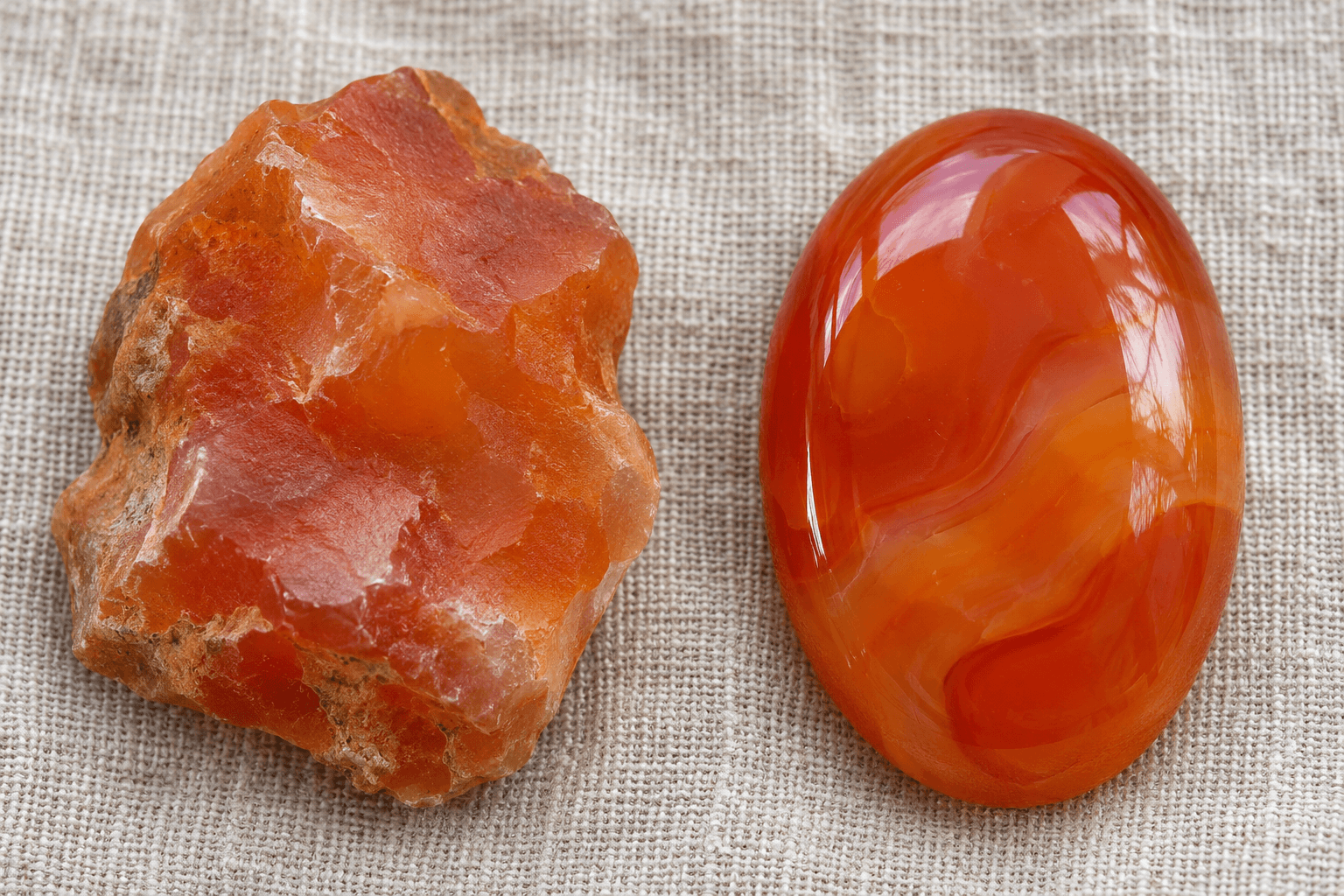
Natural, untreated gemstones carry a story that no laboratory can fake: the slow chemistry of earth, water, and time. Yet the same market that values that story also rewards color enhancement, stabilization, and heat treatment. For collectors and lapidaries, the real skill is not memorizing buzzwords but learning to read a stone's surface, structure, and behavior. This guide explains the most common treatments, the visual cues they leave behind, and the simple checks that separate an honest natural stone from a cosmetically altered one.
Why Treatment Status Matters
Treatment status affects three things: value, durability, and disclosure. An untreated stone with strong natural color and clean structure usually commands a premium because it represents the deposit's best unaltered output. Treated stones can be beautiful and durable, but their price and care requirements change. The Gemological Institute of America (GIA) and Gem-A both stress that any treatment affecting appearance or stability must be disclosed at sale. When documentation is missing, the safest assumption is that the stone has been treated.
For RENDI VIRGO buyers, untreated Indonesian material—grape agate, moss agate, blue amber, chrysocolla in chalcedony, fossil coral, and palm wood—offers the most direct link to locality and formation. Browse natural cabochons at /shop/cabochons, rough material at /shop/rough, or display specimens at /shop/specimen.
The Most Common Treatments and Their Visual Signatures
Dyeing and Color Enhancement
Dyeing is the oldest and most common treatment. Porous or fractured stones—agate, chalcedony, turquoise, and howlite—are soaked in dye to deepen or change color. Visual clues include color that pools in fractures, uneven saturation, and hues that look too vivid for the mineral. Under magnification, dye often concentrates along crack lines or in porous zones. A cotton swab dampened with acetone may lift surface dye on poorly stabilized pieces, though this test can damage finishes and should be used cautiously.
Stabilization and Resin Filling
Stabilization impregnates porous stones with resin or polymer to improve durability and take a polish. It is common in turquoise, variscite, and some agates. Signs include a slightly plastic or waxy luster, filled pits, and a more uniform surface than the rough would suggest. Stabilized stones are not necessarily "fake," but they are composite material. Disclosure matters because stabilization changes hardness, porosity, and long-term aging.
Heat Treatment
Heat treatment alters color or clarity by controlled heating. Amethyst becomes citrine, aquamarine loses green, and some sapphires intensify. Heat can leave subtle evidence: altered inclusions, "frosting" in fractures, or a color that looks too uniform. Unlike dyeing, heat treatment is usually permanent and accepted in the trade when disclosed.
Diffusion and Surface Coating
Diffusion introduces elements into the outer layer of a stone; coatings apply a thin film. Both are surface-level and can wear. Look for color that stops abruptly at edges, facet junctions, or scratches. A loupe and raking light reveal coating boundaries quickly.
A Practical Visual Inspection Checklist
- Examine under 10x magnification. Natural inclusions, growth lines, and zone coloration look organic; treatment marks look mechanical or pooled.
- Use raking light. Natural surfaces scatter light unevenly; coated or filled surfaces can appear unnaturally even.
- Check fractures. Dye pools in cracks; natural color usually follows banding or crystal structure.
- Compare with known untreated examples from the same locality. Mindat and USGS locality data help establish a baseline.
- Ask for disclosure. Reputable sellers state treatment status in writing.
Field and Laboratory Tests
Simple tools go a long way. A refractometer, polariscope, and Chelsea filter help distinguish natural from treated material. For definitive answers, send stones to GIA, Gem-A affiliated labs, or other accredited gemological laboratories. Lab reports document treatment status and are the strongest resale protection a collector can buy.
Provenance, Disclosure, and Value
Provenance and treatment disclosure work together. A stone with documented locality and an untreated status is more liquid in the resale market. The GIA's Colored Stone Grading and identification standards, along with Gem-A's gemmology curriculum, provide the framework most professionals use. When in doubt, buy from sellers who publish locality and treatment information and who stand behind their material.
FAQ
How can I tell if a stone is dyed?
Look for color pooling in fractures, uneven saturation, and hues that are unusually vivid. An acetone swab may lift surface dye, but test carefully and only on an inconspicuous area.
Is stabilization the same as treatment?
Yes. Stabilization is a treatment that fills pores with resin or polymer to improve durability and polish. It is common and acceptable when disclosed.
Does heat treatment always reduce value?
Not always. Heat treatment is widely accepted for some stones, but untreated material with equivalent color usually retains a higher premium.
Should I always prefer untreated stones?
Prefer untreated when color and clarity are already strong. Treated stones can be excellent choices for jewelry and display when price, durability, and disclosure are transparent.