
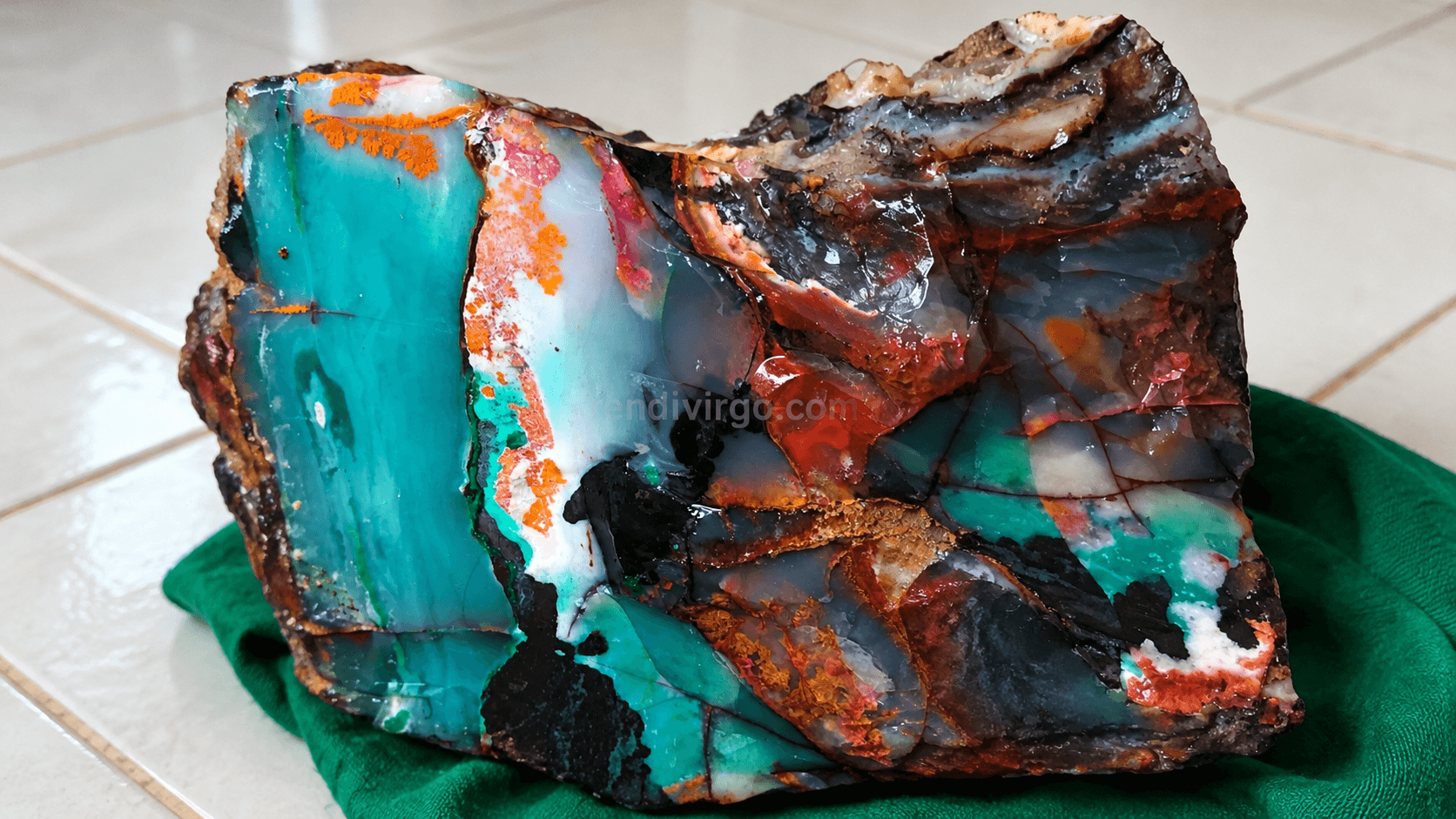
A piece of multicolor petrified wood from Garut, West Java, can look like a landscape captured in stone. Turquoise and blue-green areas meet red, orange, white, brown, and dark bands, while fractures and flowing patterns give each specimen a distinctive appearance. These strong contrasts help make multicolor petrified wood from Garut appealing to mineral collectors, lapidary artists, and gemstone enthusiasts.
Garut is known in gemological literature for opal associated with fossilized, or silicified, wood. Some reported material contains natural copper inclusions, adding another point of interest to the pattern. But colorful material can include several minerals, and similar colors do not always mean the same mineral is present. In particular, blue-green areas should not automatically be identified as chrysocolla. That distinction matters when describing a specimen for a collection, jewelry listing, or educational article.
What Is Multicolor Petrified Wood?
Petrified wood is fossil wood in which minerals have filled pores, replaced some or all of the original wood, or done both. When silica-rich groundwater moves through buried wood, silica can accumulate in the tissue and preserve details of its structure. The result may retain wood-like patterns while becoming a dense stone. The U.S. National Park Service describes these processes as permineralization and replacement; silica is a common mineral material in fossil wood. National Park Service: Permineralization and Replacement
- “Silicified wood” is often a useful description when silica is the main material involved. Some Garut material is also described as opal associated with fossil wood. Opal and chalcedony are both silica-rich materials, but they are not identical. A specimen can contain more than one silica material, along with other mineral inclusions.
- The word “petrified” describes the stone-like result, not a single recipe for how the specimen formed. That is why appearance alone cannot provide a full mineral identification. Microscopy and laboratory analysis can help determine what is present in a particular piece.
Why Garut’s Geological Setting Matters
Published gemological reports describe opal and fossilized wood from Garut Regency in West Java. One report notes that opal in the area is associated with silicified wood and volcanic deposits. It discusses a proposed setting in which volcanic material buried forests, while silica-bearing fluids later circulated through the surrounding rocks. This provides useful regional context, though it does not establish the exact history of every specimen. Journal of Gemmology, 2018
Rapid burial can protect fallen wood from ordinary decay. Later, water moving through volcanic sediments and ash can carry dissolved silica into spaces in the wood. Over time, minerals fill pores or replace organic material. If other elements or mineral grains are present as this happens, they may contribute contrasting colors and textures.
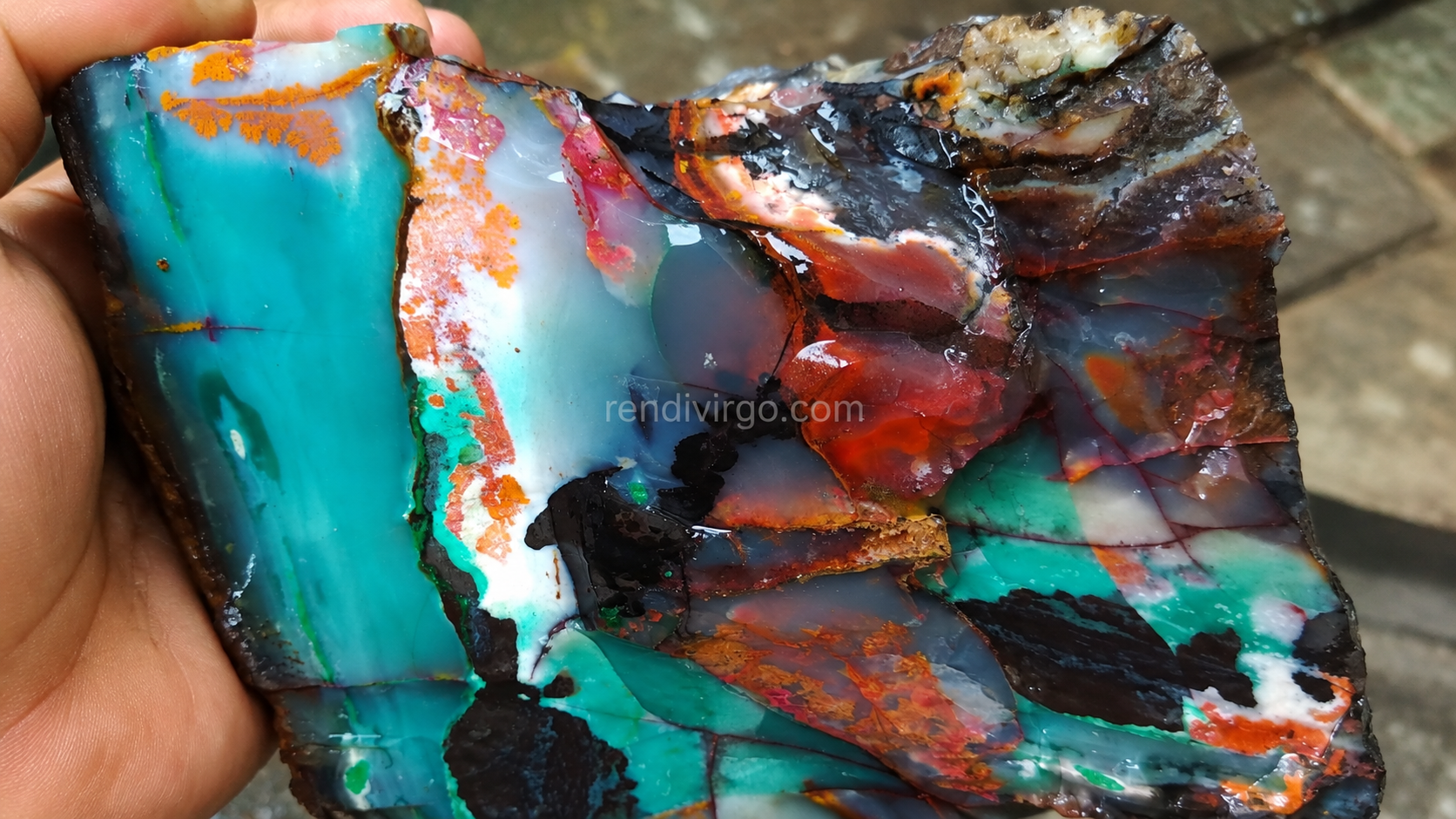
These processes help explain why one piece of Garut silicified wood may look quite different from another. Mineral composition, fluid chemistry, fractures, and the degree of replacement can vary across a deposit and even within one specimen. The result is a material valued for its natural pattern as much as for its geological story.
The Colors of Garut Petrified Wood
Descriptions of Garut opal-bearing wood include blue-green, brown, and black areas, as well as reported white, orange, and yellow-green zones. The specimen photographs accompanying this article show similarly strong contrasts, with turquoise-like bands, red and orange patches, pale areas, and darker sections. These are visual descriptions; they do not establish the identity of each colored zone. Journal of Gemmology, 2018
Color in silica-rich material can result from inclusions or trace elements, but a color is not a mineral test. Different minerals—and mixtures of minerals—can look similar, especially after cutting and polishing. Dark bands, metallic-looking flecks, pale silica, and colored patches may also have different origins within the same piece.
This variation gives multicolor petrified wood from Garut its decorative appeal. When a slab is cut, the direction of the cut can expose bands and internal patterns in different ways. Polishing can bring out translucency and contrast, though it cannot by itself confirm the mineral species in a colored area.
Native Copper and Copper-Bearing Wood
Copper can occur in a specimen in more than one form. Native copper means metallic elemental copper. A copper mineral, by contrast, is a chemical compound that contains copper, such as chrysocolla. Both may occur in copper-rich geological settings, but their appearance and composition differ.
The Gemmological Association of Great Britain has reported silicified wood from Garut containing reflective copper inclusions. A related report describes dendritic, or branching, copper patterns within silica-rich material. Such inclusions can create metallic-looking details that stand out against the surrounding wood-like or opaline matrix. Gem-A, Journal of Gemmology
A 2025 GIA report examined chalcedony cabochons reportedly from Lawang Kori in Garut Regency. The studied pieces contained abundant elemental copper, but the authors noted that brightly colored secondary copper minerals were absent from those specimens. This is an important reminder: evidence of copper in one Garut material does not mean every copper-bearing specimen also contains chrysocolla. GIA: Copper in Indonesian Chalcedony
Is the Blue-Green Mineral Chrysocolla?
Chrysocolla is a hydrated copper silicate commonly associated with oxidized copper deposits. It is often blue-green, so it may seem like an obvious explanation for a turquoise-colored area. But other minerals and silica-rich mixtures can show similar colors. The U.S. Geological Survey describes chrysocolla as a secondary mineral found in oxidized copper veins and notes its blue-green appearance. USGS Spectral Library: Chrysocolla
That general description does not identify the mineral in the photos. GIA’s study is particularly relevant to Garut: the studied Lawang Kori chalcedony contained native copper but lacked the colorful secondary copper minerals found in some other materials. Chrysocolla, malachite, and cuprite were described in the study’s comparison sample from Obi Island—not in the Lawang Kori specimens. GIA: Copper in Indonesian Chalcedony
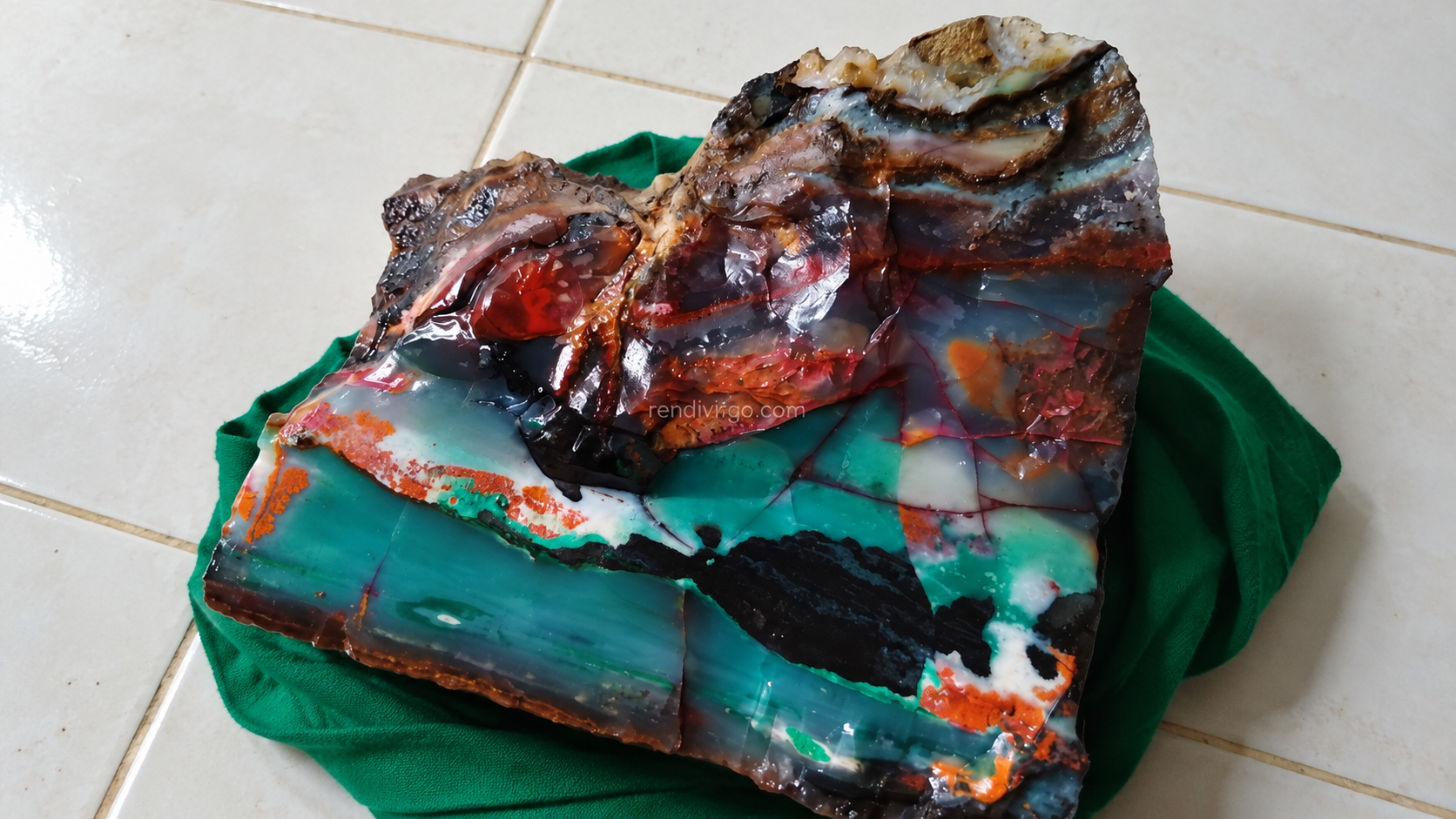
For this reason, the safest description is “multicolor silicified wood from Garut, with copper or chrysocolla identification subject to verification,” unless the individual specimen has been analyzed. A laboratory can use methods such as Raman spectroscopy, X-ray diffraction, or chemical analysis to investigate its composition. The suitable method depends on the specimen and the question being asked.
Reading the Specimen in the Photographs
The photographed specimen has a polished face with blue-green, white, red-orange, brown, and dark areas. It is visually striking and suitable for a close study of color boundaries, bands, fractures, and possible inclusions. The photos are helpful for describing what the piece looks like, but they cannot confirm the exact minerals or independently verify where the stone was collected.
That distinction is useful for sellers and collectors. A description can accurately note the visible colors and patterns while keeping the mineral claim specific to what is known. For example, “blue-green and red-orange zones” describes appearance. “Chrysocolla-bearing” makes a mineralogical claim and should be supported by a reliable identification.
Lapidary Uses and Collector Appeal
Silicified wood and opal-bearing wood can be cut into slabs, polished display pieces, cabochons, and other lapidary forms. Their appeal often comes from a combination of features: wood-like structures, color zoning, translucency, and unusual inclusions. Copper-bearing examples may attract special interest because metallic inclusions create a different visual effect from the surrounding silica.
The material’s variety can also make each finished piece distinctive. A cut that follows a layered zone may emphasize bands, while another may bring out branching patterns or contrasting patches. The polished surface can make these features easier to see, but lapidary work may expose fractures or weak areas, so careful cutting is important.
For collectors, a clear description of the piece is part of its value. Notes about the seller, locality, photographs before cutting, and any laboratory report help preserve provenance. Such records are particularly useful when the material is described as copper-bearing, opalized, or chrysocolla-bearing.
How to Buy and Care for Garut Petrified Wood
When buying a specimen, ask for its locality information and find out whether mineral identifications come from a gemological report, a seller’s description, or visual inspection. If chrysocolla is a key feature, ask what evidence supports that identification. A seller should be able to distinguish confirmed mineral analysis from a likely or trade description.
For display, keep polished fossil wood away from hard impacts and sudden temperature changes. Clean it gently with a soft cloth and avoid harsh chemicals unless the seller or a conservator has confirmed they are suitable for that material. If the piece has visible fractures, ask a lapidary professional before drilling, setting, or attempting repairs.
Frequently Asked Questions
- Is Garut petrified wood real fossil wood?
Published gemological sources describe opal associated with fossilized or silicified wood from Garut. For a specific specimen, preserved wood structure and mineral identity should be evaluated from the piece itself.
Does all multicolor petrified wood from Garut contain copper?
No. Reports document copper-bearing examples, but that does not mean every piece contains copper. Even copper-bearing pieces can differ in the form and distribution of copper.
- Does blue-green color prove the presence of chrysocolla?
No. Chrysocolla is commonly blue-green, but color alone is not enough to identify it. A mineralogical test is needed to confirm chrysocolla in an individual specimen.
- What makes this material interesting to collectors?
Its appeal comes from the combination of fossil wood patterns, silica-rich material, varied colors, and—in some reported examples—metallic copper inclusions. Each cut can expose a different arrangement of these features.
A Colorful Geological Record from West Java
Multicolor petrified wood from Garut brings together a fossil story and a mineral story. Silica-rich fluids can preserve or replace wood, while later mineral inclusions and variations in composition contribute to the colors and patterns collectors admire. Published reports support the existence of Garut silicified wood and copper-bearing examples, but they also show why mineral identification should be specimen-specific.
Chrysocolla is a useful term to understand when discussing blue-green copper minerals, yet it should not be assigned to a specimen based on color alone. Describing what is visible, documenting provenance, and using laboratory analysis for mineral claims gives collectors a clearer and more trustworthy picture of each stone.