
Blue Opalized Wood from Garut, Indonesia: Cikolak’s Blue Opal
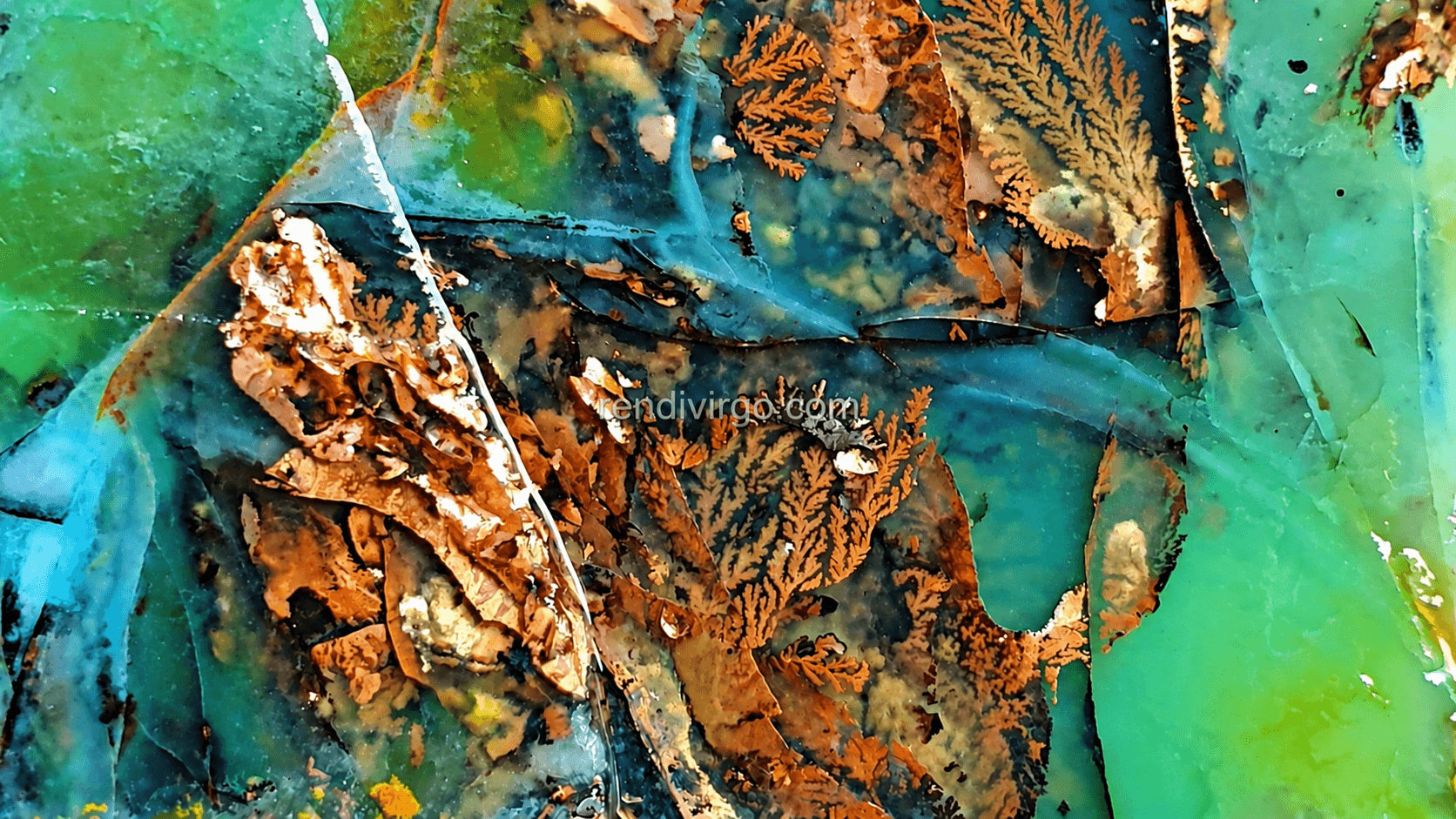
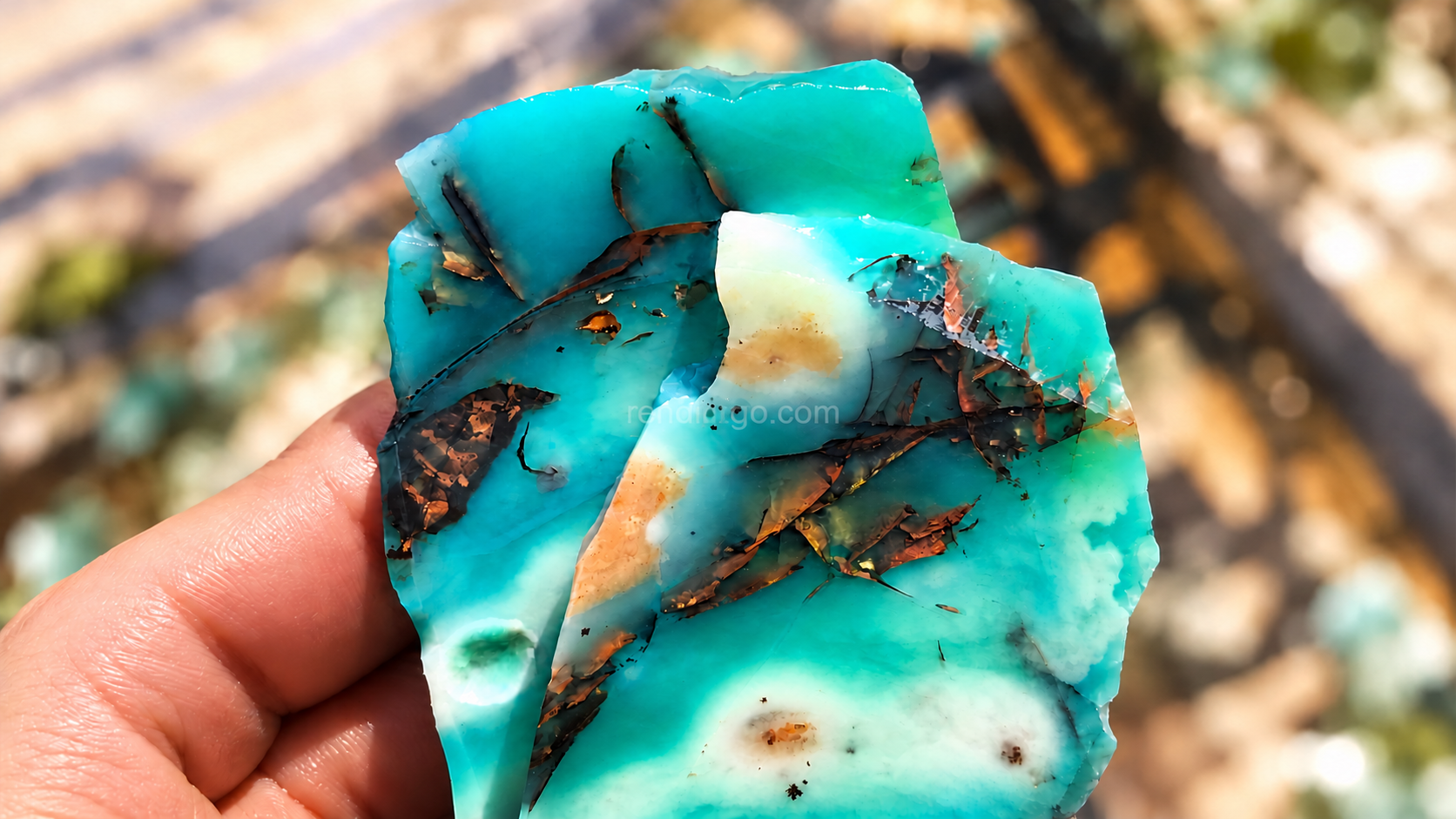
In the mountainous landscape of Cikolak, South Garut, West Java, a distinctive gemstone has attracted the attention of collectors: Blue Opalized Wood. It combines blue to blue-green opal with patterns that resemble ancient wood. Some specimens also contain visible copper inclusions.
I visited the area around Mount Cikolak and saw the appeal of this material firsthand. According to my account, the deposit had been known for several years before the area became accessible again around 2017.A gem report published by the Gemological Institute of America notes that West Java opal was first seen in the spring of 2017. A 2018 report in The Journal of Gemmology also describes a relatively new blue-to-green opal deposit in Garut associated with fossilized wood.
What Is Blue Opalized Wood?
Blue Opalized Wood is a popular name for opal associated with fossilized or silicified wood. In specimens from Garut, the colors and textures of opal appear alongside patterns that resemble wood grain. A 2018 report in The Journal of Gemmology notes that opal from the Garut area is commonly associated with fossilized wood. Some pieces contain native copper, which can appear as inclusions within the material. Copper is not present in every specimen.
Blue, Black, and “Caribbean Blue” Patterns
The material displays a range of colors and patterns. Some pieces are predominantly blue or blue-green, while others include brown, black, white, or copper-colored details. During my visit, I also encountered pieces described as “Caribbean blue,” as well as blue specimens with dark or black areas.
“Caribbean blue” is best understood as a visual or trade description, rather than a formal gemological classification. Each piece has its own combination of colors and wood-like patterns.
- Copper Inclusions and Opal Color - Copper is a notable feature in some Garut specimens. Gemological testing has detected copper in West Java opal, and published reports document pieces with visible native copper. Researchers have suggested that copper-bearing minerals may contribute to the blue-green color, although the precise cause has not been confirmed for every specimen.
- How Does Opalized Wood Form? - Opalized wood forms when mineral-rich fluids interact with buried wood over time. Silica can fill spaces in the wood or replace parts of its structure, preserving patterns that resemble the original grain.
A 2018 gemological report presents a hydrothermal model for opal-bearing silicified wood in the Garut area. Under this interpretation, mineral-rich fluids moved through volcanic rocks and carried elements such as copper, manganese, and iron. This is a proposed explanation for the regional material; it does not prove that every Cikolak specimen formed in exactly the same way.
A 2026 study examined green opalized wood from Garut and identified opal-CT, along with tiny inclusions of glauconite or celadonite. The authors proposed that intense weathering and leaching of volcanic material contributed to its formation. Since the study focused on green material, it provides useful geological context but does not directly explain every blue specimen from Cikolak.
Cikolak’s Geological Setting
During my visit, I also noted reports of gold and copper mining, as well as hot springs in the surrounding area. These features add to the geological interest of South Garut. Their proximity, however, does not by itself prove a direct link between a particular mine or hot spring and the formation of a specific opal specimen.
Blue Opalized Wood from Cikolak brings together fossil wood, volcanic geology, silica-rich mineralization, and, in some pieces, native copper. Its varied colors and patterns make it a distinctive example of Garut’s natural geological heritage.
Frequently Asked Questions
- Is Blue Opalized Wood from Garut always blue? - No. Reported specimens can show blue, blue-green, brown, black, white, and other color areas. Their appearance varies from piece to piece.
- Does every specimen contain copper? - No. Published reports describe native copper in some West Java opal specimens, but copper is not present in every piece.
- Is “Caribbean blue” an official classification? - In this article, “Caribbean blue” describes a particular shade. It is not presented as a formal gemological classification.